Rhinoplasty Procedure Overview
Rhinoplasty is performed under general anaesthetic as a day surgery and typically takes between three and four hours. The specific surgical approach depends on your goals, anatomy, and the structural changes required to achieve your desired outcome.
During the procedure, the surgeon carefully reshapes bone, cartilage, or both to refine the contours of the nose. This may include smoothing the nasal bridge, refining the nasal tip, adjusting projection, or improving overall proportion. Every step of the procedure is tailored to create balanced, natural-looking results that complement your facial features. There are two primary surgical techniques:
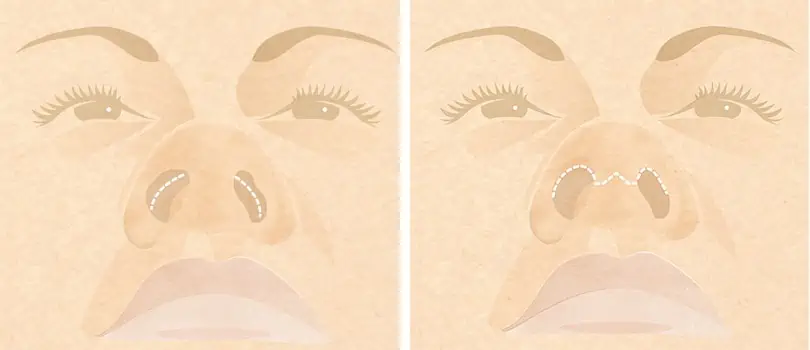
Closed Rhinoplasty
In closed rhinoplasty, all incisions are made inside the nostrils, leaving no visible scars. This technique is ideal for patients requiring moderate adjustments to the nasal bridge or width.
Advantages:
- No external scarring
- Shorter surgery and recovery time
- Less postoperative swelling
Limitations:
- Limited access to the nasal tip and cartilage
- Less suitable for extensive reshaping or revision surgery
Open Rhinoplasty
Open rhinoplasty involves a small incision across the columella (the tissue between the nostrils) combined with internal incisions. This approach provides complete access to the nasal framework, allowing for precise reshaping of bone, cartilage, and soft tissue.
Advantages:
- Greater visibility for detailed refinement
Preferred for complex or revision surgeries
Allows comprehensive correction of both aesthetic and structural concerns
Both techniques can produce outstanding results when performed by an experienced plastic surgeon. For patients with minor irregularities or volume deficiencies, non-surgical rhinoplasty using dermal fillers or fat grafting may also be an option, although results are temporary.