TRAM Flap Breast Reconstruction in Surrey, BC

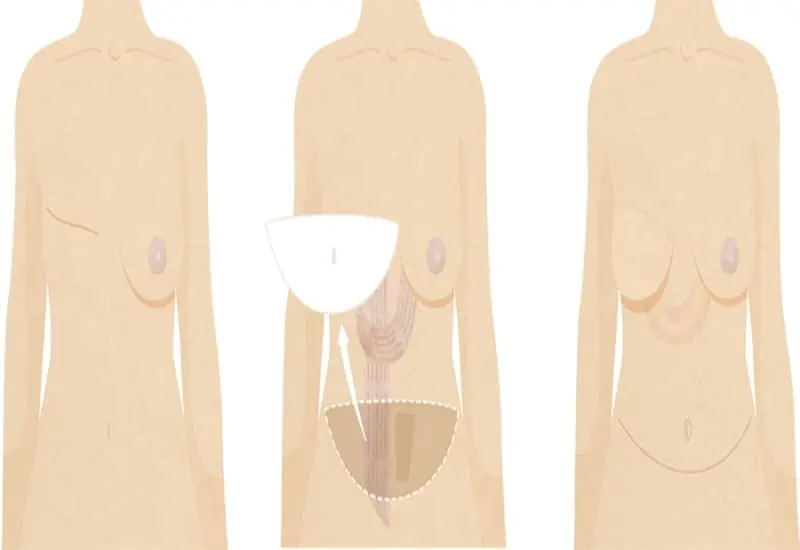
The TRAM (Transverse Rectus Abdominis Myocutaneous) flap is a form of breast reconstruction that uses tissue from the lower abdomen to recreate the breast mound after mastectomy. During this procedure, skin, fat, and a portion of the abdominal muscle are transferred to the chest and shaped to form a new breast.

This technique has historically been one of the most widely used methods of autologous breast reconstruction. Because many women naturally have excess tissue in the lower abdomen, the procedure can create a soft, natural-feeling breast while also producing a contour similar to a tummy tuck.

Background media

Types of TRAM Flap Breast Reconstruction

TRAM flap reconstruction can be performed using two main approaches. The primary difference between them is how the transplanted tissue maintains its blood supply.

Pedicled TRAM Flap

In a pedicled TRAM flap procedure, the abdominal muscle and the blood vessels supplying it remain attached near the ribcage. The surgeon lifts the skin, fat, and muscle from the lower abdomen and tunnels it beneath the upper abdominal skin to the chest.

Once positioned in the chest area, the tissue is reshaped to create a new breast mound while maintaining its original blood supply through the attached muscle.

Free TRAM Flap

In a free TRAM flap procedure, the tissue is completely detached from the abdomen and transplanted to the chest. Using microsurgical techniques, the surgeon reconnects the flap’s blood vessels to vessels in the chest to restore circulation.

Both pedicled and free TRAM procedures may be performed at the time of mastectomy (immediate reconstruction) or at a later stage (delayed reconstruction). Free TRAM reconstruction is closely related to other microsurgical techniques, such as the DIEP flap.

The PSG logo

When Is the TRAM Flap Breast Reconstruction Used?

TRAM flap reconstruction may be appropriate for patients who prefer a reconstruction that uses their own tissue rather than an implant. It can produce a breast with a soft, natural feel and long-term durability. However, certain conditions may make this technique less suitable, including:

  • Previous major abdominal surgery
  • Plans for future pregnancy
  • Insufficient lower abdominal tissue
  • Smoking, diabetes, or obesity
  • Previous radiation to the inframammary fold or need for future radiation

TRAM flap reconstruction is also used less commonly for bilateral reconstruction because removing both rectus muscles can significantly increase the risk of abdominal weakness or hernia.


Background media

Good Candidates

You may be a candidate for TRAM flap reconstruction if you are in good overall health and have sufficient skin and fat in the lower abdomen to recreate the breast mound.

A consultation with your surgeon will determine whether this technique or another reconstructive approach is best suited to your anatomy, cancer treatment plan, and personal preferences.

Banner media

Testimonials Words From Our Patients

N.G.

Had a breast reduction done by Dr Adrian Lee. Amazing surgeon - very kind, explains things well and paid close attention to detail. The staff in the office are very kind too. I am ...

R.M.

I have had two surgeries at the Plastic Surgery Group at City Centre. I have only had interaction with Laurie in reception and Dr. Prince. Dr. Prince is second to none. She takes t...

S.W.

Dr. Oxley has done two procedures removing cancer for me. The first visit I had with him was in the surgery suite. He was professional, punctual and had just the right amount of hu...

K.G.

Dr. Imran Ratanshi performed my breast reduction surgery a month ago and I feel amazing. The recovery time was unbelievable and his staff has continually checked up on me to make s...

R.M.

My highest recommendation for an outstanding doctor and person: Dr. Rizwan Mian. Dr. Mian has surgically removed cancer from my skin a number of times in recent years - all basal-c...

J.H.

Can’t recommend Dr Genoway enough! I was looking for a reconstructive surgeon for 5 years, had several consultations with other doctors. As soon as I met Dr Genoway, I knew I...

M.Y.

I had my breast surgery in Plastic Surgery Group. Well organized safe and the best care during my surgery. Thank you guys and wish you all the best. 

G.M.

I was a novice to surgery and the staff here were amazing - very friendly and helpful. Dr. Lee was very calm and knowledgeable and answered my questions. Breast reduction surgery w...

T.W.

Highly recommend Dr. Prince. Had a breast reduction Oct.20....best decision Ive ever made. Dr. Prince was so professional and helpful. Great bedside manner. If you're on the fence ...

J.P.

Dr.Oxley has been patient and very kind throughout my procedure making my experience less stressful and much more manageable. Also his office staff are a pleasure to work with. Alw...

J.H.

I am a breast cancer survivor. After my reconstruction surgery failed I was referred to Dr Imran Ratanshi. His kind demeanor and great sense of humor put me at ease immediately. I ...

J.C.

Absolutely amazing Suman is amazing at her job a big thank you. Dr R Mian so professional and made me feel so comfortable. A true artist in his field. I had a breast reduction Best...

C.A.

I had an exceptional experience with Dr. Genoway and their team. From the initial consultation to the surgery day, I felt an unwavering sense of compassion and support. The effort ...

Reviews media

TRAM Flap Breast Reconstruction

Schedule A Consultation

Contact Us
Contact us media

Advantages

  • Uses your own tissue
  • Creates soft and natural breast
  • Rejuvenates the abdomen (removes fat from abdomen similar to a tummy tuck)
  • Is easy to conceal scars
  • Brings healthy, new skin to the chest which may be necessary in patients who have skin damage from multiple previous surgery scars, radiation, or failed implant reconstruction
  • Can more easily match the shape of opposite breast than implant reconstruction
  • Once healed, chance of needing future revisional surgeries low

Disadvantages

  • Requires longer hospitalization than implant reconstruction (3-5 days)
  • The abdomen needs to recover as well. (This requires 6-8 weeks of limited physical activity)
  • Risk of abdominal weakness or hernia (especially in bilateral TRAM reconstruction)
  • Risk of fat necrosis (firm, occasionally painful deep scars in the fat of the breast)
  • Thin patients may see a bulge on the lower part of the breast where the tunnel was made
Background media

Preparing for Surgery

Preparation for TRAM flap reconstruction includes routine blood tests and a preoperative evaluation with anesthesia.

Patients should stop smoking before surgery because nicotine significantly increases the risk of complications such as wound healing problems, infection, and respiratory issues. You will also be asked to stop taking blood thinners, anti-inflammatory medications (except Tylenol), and certain supplements two weeks prior to surgery. Herbal products such as ginkgo biloba, St. John’s Wort, fish oil, flaxseed oil, and high-dose vitamin E may increase bleeding risk and should also be discontinued.

Your surgeon will provide individualized instructions based on your medical history.

dark brown filter on white flower petal

Possible Complications

As with any surgical procedure, risks include anesthetic reactions, infection, scarring, poor wound healing, bleeding, and fluid collections (seroma).

Complications specific to TRAM flap reconstruction may include:

  • Partial flap loss
  • Fat necrosis (firm scar tissue within the reconstructed breast)
  • Abdominal hernia or weakness
  • Numbness of the skin
  • Breast asymmetry

Your surgeon will review these risks in detail during your consultation.

Banner media

Contact Us

To learn more about how you may benefit from TRAM flap reconstruction or to schedule a consultation with one of our board-certified plastic surgeons, please contact our Surrey office today.

Recovery

Following surgery, it is common to experience soreness in both the chest and abdomen for several weeks. The abdomen may feel tight, and movements involving bending, lifting, or twisting should be avoided for approximately six to eight weeks.

Patients typically have one surgical drain in the chest and two in the abdomen. These are usually removed in the office within one to two weeks. Showering is generally postponed until drains are removed. Most sutures are absorbable.

Recovery varies depending on overall health, the extent of surgery, and whether reconstruction was immediate or delayed. Many patients return to light activities within several weeks, though complete healing may take six to twelve months.

Additional procedures such as nipple reconstruction and areola tattooing are commonly performed three to six months after the initial surgery. Final breast contour and scar maturation typically continue to improve over the course of a year.

Banner media

Schedule a Consultation

Schedule a consultation with one of our surgeons and get honest guidance tailored to your aesthetic goals, right here in Surrey.

Contact Us
Contact us media
Background media
Accessibility: If you are vision-impaired or have some other impairment covered by the Americans with Disabilities Act or a similar law, and you wish to discuss potential accommodations related to using this website, please contact our Accessibility Manager at (778) 907-8812.
Contact Us